Memory and Forgetting
Midnight's ChildrenMemory and Forgetting names a governing tension in Saleem Sinai’s life and autobiography: memory can rescue fragments from violence and loss, yet it cannot make the past complete or perfectly reliable. The magicians’ colony forgets its history as Saleem becomes more intensely burdened by his own; at the end, his jars of pickles preserve that history while openly acknowledging its distortions. Remembering is therefore neither simple recovery nor a guarantee of truth, but a difficult act of attention, revision, and responsibility.
Remembering as Survival
The novel first makes memory bodily and involuntary. At Jallianwala Bagh, Aadam Aziz’s sneeze throws him forward among the crowd and saves his life during the massacre. He scrambles to recover his medical equipment as people fall around him; the clasp of his Heidelberg medical bag bruises his chest so severely that the mark remains until his death years later. The episode joins survival to a physical trace: what the body carries forward is not a complete account, but an injury whose origin and consequence endure.
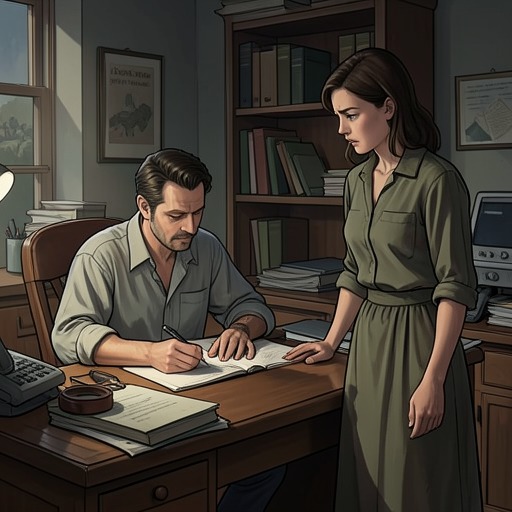
Years later, Saleem’s childhood hiding place turns recollection into a source of painful knowledge. Concealed inside the washing-chest, he sees Amina Sinai crying and hears her repeat a name until he recognizes Nadir Khan, a figure from her past whom she has not named since becoming Amina. He observes her remembered gestures as well as her words, and the discovery unsettles his understanding of his mother and family. The scene does not give the child an orderly explanation; it gives him sensory fragments—a name, hands, a hidden vantage point—from which he must begin to make meaning.
That scene also produces a bodily crisis. Overwhelmed by what he has seen and heard, Saleem sniffs sharply with the pajama-cord still in his nostril; mucus surges into his sinuses, pressure builds, and something bursts inside his head. The event becomes entangled with the emergence of his unusual powers, but its narrative significance extends beyond origin. Memory arrives with pain and confusion, and what changes Saleem cannot be separated from the way he learns it.
Memory, Injury, and Delayed Understanding
Saleem repeatedly describes the self as vulnerable to changes that divide an apparent whole. After losing a finger and having hairs removed from his head, he reflects on the contrast between a heterogeneous inner life and a body that seems outwardly indivisible. Those bodily losses, he argues retrospectively, have unsettled that wholeness; to uncork the body is to permit consequences that reach beyond private life, even altering how parents and children, love and hatred, may be understood. His later commentary gives the injuries a significance that the boy in the hospital bed could not yet fully possess.
The difference between the child’s experience and the narrator’s later knowledge is explicit. Saleem interrupts the scene of his father’s reaction to the boy’s face to grant his younger self a brief, retrospective understanding of bodily change and history. Then he withdraws that foreknowledge and returns to the ten-year-old in the hospital, bandaged and listening to music. Memory does not simply replay the past: the adult narrator rearranges the distance between experience and interpretation, showing how the meaning of an event can arrive later than the event itself.
War makes the same delay harsher. In the rubble, Saleem cannot recover his name, but memories of Jamila Singer’s departure, earlier rejection, and accumulated humiliations return in fragments. He cries that the situation is unfair, while his companions’ fear and the immediate danger continue around him. When Ayooba Baloch comforts him, a sniper’s bullet kills Ayooba; his body shields Saleem from the shot. The passage sets private memory—old injuries, remembered abandonment, the repeated sense of injustice—beside a present in which survival depends on another person’s sudden sacrifice. Remembering does not master the crisis, but it shapes what Saleem can feel and recognize within it.
The Colony’s Amnesia and Saleem’s Resistance
After Saleem returns from captivity, the magicians’ colony begins to lose its memory. Amid hunger, disease, thirst, police harassment, and repeated moves, its inhabitants forget their former powers and skills, their political convictions, and the experiences that might have helped them judge the present. They do not notice the change because they have forgotten that they were once different. Saleem finds this loss morally disturbing: to him, the past has grown vivid, while the present seems confused and insubstantial, but his companions become absorbed in immediate survival without looking back.
This contrast is sharpened by Saleem’s own condition. He remembers minute details of his jailers and surgeons and has come through his own amnesia with a renewed sense of what forgetting can erase. His attachment to memory is not merely a preference for the past; it is a refusal to let violence and deprivation make experience unthinkable. Yet the colony’s circumstances complicate any easy judgment. Its people face immediate material pressures, and the same present that consumes their attention also weakens their ability to remember. The novel presents collective amnesia as a grave loss without pretending it occurs outside the pressures of daily survival.
Saleem also imagines a generational limit to his role. Looking into Aadam Sinai’s eyes, he sees a second mirror of humility: his son may inherit a world of consequences without inheriting Saleem’s way of searching for destiny in memory and prophecy. Saleem anticipates that his own place will be peripheral, that he will become a teller of tales rather than the central actor. Memory thus passes into narration, but not as an unaltered inheritance. The child’s future belongs to a generation whose relation to fate may be different from his father’s.
Fragments, Revision, and the Pickles of History
As he approaches the story’s end, Saleem admits that he cannot produce the climax he had planned. Instead of a smooth ascent to a single peak, he has scraps of memory and clues from a damaged recollection. He compares the task to filling gaps from what remains, including the memory of a file bearing tell-tale initials. Wind-blown newspapers bring him news of his uncle Mustapha Aziz’s murder by unknown assassins; he says he did not shed a tear, but recognizes that other fragments of information must still be used to build a version of reality. The narrative’s broken shape registers the limits of what its teller can recover.
The pickle jars give that imperfect work a material form. Saleem describes thirty jars waiting to be released upon an amnesiac nation, with one jar left empty. But preservation does not mean certainty: he questions the overly harsh taste of memories of his father and the ambiguous love-flavor of the Jamila Singer jar, worries that the account of the accident in the washing-chest leaves questions unanswered, and wonders whether a true telepath would have been surprised by Mary Pereira’s confession. In some episodes, he may seem to know too little; in others, too much. The jars keep the past available while displaying the narrator’s doubts about how he has arranged it.
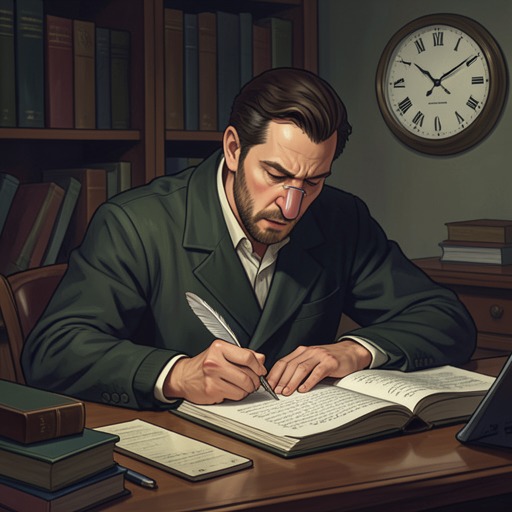
Revision, Saleem insists, should be constant, but he has neither the time nor the energy to perfect the account. He settles instead on the stubborn claim that events happened as they did. The spices alter and intensify what they preserve, just as narration reshapes remembered experience; the test, as he frames it, is to change the flavor without changing its kind and to give the material form and meaning. The pickles are therefore not neutral records. Their distortions are admitted into the act of preservation, making the narrator’s responsibility visible rather than claiming an impossible purity.
In the novel’s final image of this process, the jars offer the possibility that the world may one day taste the pickles of history. Their flavor may overwhelm some readers, but Saleem hopes they will carry an authentic taste of truth and remain acts of love. Memory cannot restore an untouched past or defeat forgetting once and for all. It can, however, preserve particular lives and losses in a form that exposes its own limits—and asks others not to let the fragments disappear.